Posted on Leave a comment

The Hidden World of Cinderella Stamps: A History of Philately’s Most Enigmatic Creations

Cinderella stamps occupy a curious and often enchanting corner of philately. They look like postage stamps, feel like postage stamps, and are collected with the same passion as postage stamps—yet they were never valid for postal use. Their story is a blend of artistry, propaganda, commerce, fantasy, and local history, making them one of the most diverse and imaginative branches of stamp collecting.

🎭 What Exactly Are Cinderella Stamps?

In philatelic terms, Cinderella refers to any stamp-like label that is not an official postage stamp. The name evokes the fairy-tale heroine: something overlooked, unofficial, and outside the royal (postal) family, yet full of charm.

Cinderellas include:

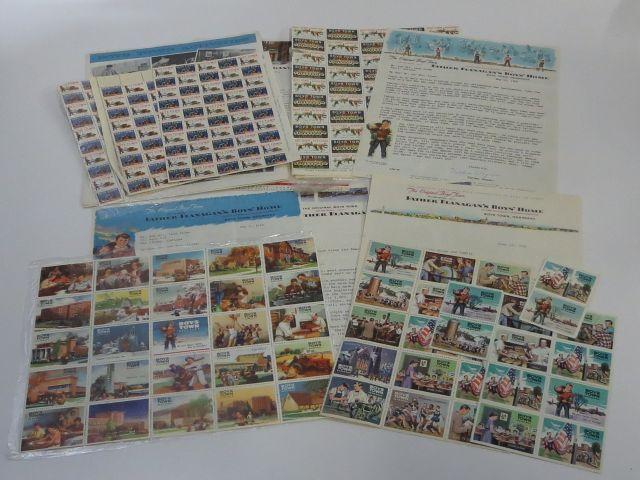
Charity seals (e.g., Christmas Seals)
Local post stamps
Poster stamps
Exhibition labels
Propaganda and political labels
Fantasy issues
Private courier stamps
Revenue stamps (sometimes included, sometimes treated separately)

Their diversity is unmatched, and their history stretches back nearly as far as official postage itself.

🕰️ Origins: The 19th Century Birth of Cinderella Philately

1. Poster Stamps and Advertising Labels (mid–late 1800s)
The earliest Cinderella-like labels emerged as advertising poster stamps. Businesses discovered that miniature, gummed, perforated labels were a clever way to promote products. These labels often featured:

Colorful lithography
Art Nouveau and Art Deco designs
Company logos, events, and exhibitions
Germany became the epicenter of poster stamp production, with thousands of designs printed for fairs, breweries, shipping lines, and cultural events.

2. Local Posts and Private Carriers
Before national postal systems became fully organized, many towns and private companies issued their own stamps. Some famous examples include:

Local posts in the United States and Europe
Railway mail labels
Private city posts (e.g., the London District Post)
These stamps often filled gaps in official service, especially in remote or rapidly growing urban areas.

🎄 Charity Seals: A Global Philatelic Phenomenon

One of the most influential Cinderella categories began in 1904, when Danish postal clerk Einar Holbøll created the first Christmas Seal to raise funds for tuberculosis treatment. The idea spread rapidly:

By 1907, the United States issued its first Christmas Seal.

Many countries adopted similar charity labels for health, welfare, and humanitarian causes.

These seals became a beloved annual tradition, collected for their beauty and social impact.

🏛️ Exhibitions, Fairs, and Propaganda Labels

Exhibition Labels
World’s fairs and national exhibitions produced thousands of Cinderella stamps, often featuring:
National pavilions
Technological achievements
Cultural symbols
They served as souvenirs and promotional material, capturing the optimism of the industrial age.
Propaganda and Political Labels

During both World Wars and the Cold War, governments and private groups issued labels to:
Promote national unity
Encourage war bonds
Spread political messages

These Cinderellas offer a vivid window into the social and ideological climate of their time.

🏝️ Fantasy Issues and Micronations

The 20th century also saw the rise of fantasy stamps—labels from places that never had official postal authority. Some were whimsical; others were created by micronations or artists.

Examples include:

Sealand
Bir Tawil
Nagaland

Local “bogus” issues created for collectors

While not postal, they often feature imaginative artwork and have become a niche collecting field.

📚 Cinderella Stamps in Modern Philately

Today, Cinderella collecting is thriving because:

It offers affordable access to rare and beautiful designs.
It covers themes often ignored by official postal agencies.
It appeals to collectors who enjoy storytelling, design, and historical context.

Specialized societies—such as the Cinderella Stamp Club (UK)—continue to research and promote this fascinating area.

🌟 Why Cinderella Stamps Matter

Cinderella stamps remind us that philately is not just about postal history—it’s about culture, creativity, and human expression. They capture:

Local identities
Social movements
Commercial art
Political messages
Fantastical worlds

In many ways, they are the most imaginative and democratic form of stamp art.
Posted on Leave a comment

Bir Tawil: The World’s Most Curious “No Man’s Land”

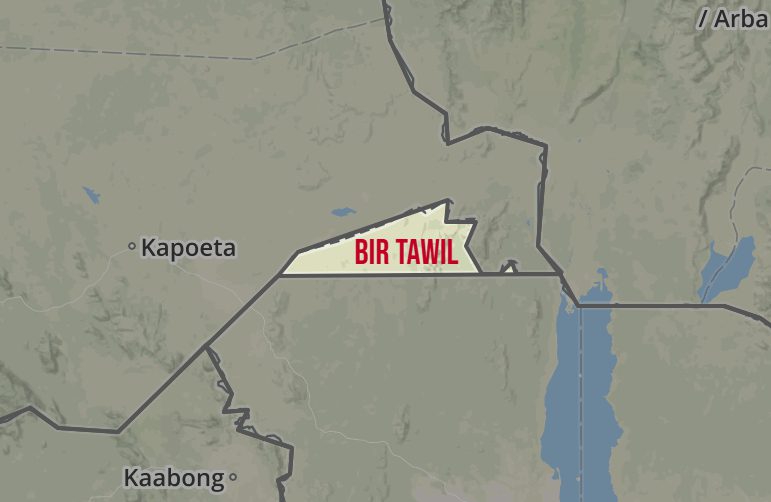
Bir Tawil is one of the strangest geopolitical anomalies on Earth—a 2,060 km² patch of desert between Egypt and Sudan that no country claims. In a world where nearly every square meter of land is governed, disputed, or fought over, Bir Tawil stands out as a rare example of terra nullius—land belonging to no recognized state.

📍 Where Is Bir Tawil?

Located along the Egypt–Sudan border, Bir Tawil sits just west of the Red Sea and south of the 22nd parallel north. Unlike the nearby Hala’ib Triangle, which both countries claim, Bir Tawil is unwanted by either side.
Its shape is often described as a trapezoid or quadrilateral, though it is sometimes mistakenly called the “Bir Tawil Triangle”.

🗺️ How Did This Happen? A Tale of Two Borders

The unclaimed status of Bir Tawil stems from a border contradiction created during British colonial rule:

1899 Political Boundary
Set the Egypt–Sudan border at the 22nd parallel north.
Under this line, Bir Tawil falls inside Sudan.

1902 Administrative Boundary
Redrawn by the British to reflect tribal land use.
Bir Tawil was placed under Egyptian administration, because it was used by the Ababda tribe near Aswan.

The Paradox
Egypt insists on the 1899 border, which gives it the valuable Hala’ib Triangle.
Sudan insists on the 1902 border, which gives it the Hala’ib Triangle.
Neither wants Bir Tawil, because claiming it would weaken their claim to Hala’ib.
Thus, Bir Tawil remains a geopolitical orphan.

🏜️ Geography and Environment

Bir Tawil is a harsh, arid desert with:
No permanent settlements
No water sources
No infrastructure
Temperatures that soar well above 40°C
Nomadic groups such as the Ababda and Bishari occasionally pass through the region, but there is no permanent population.

🧭 Attempts to Claim Bir Tawil

Because it is one of the few habitable places on Earth not claimed by any state, Bir Tawil has attracted adventurers, micronation founders, and dreamers.

Some notable attempts include:
Individuals declaring themselves “kings” or “princes”
Proposals for micronations such as the “Kingdom of North Sudan”
Recent claims like the “Principality of Bir Tawil,” which even submitted a request to the UN in 2025
None of these claims are recognized by any government.

⚖️ Terra Nullius: A Rare Modern Example

Bir Tawil is often cited as one of the only true examples of terra nullius outside Antarctica. The term means “land belonging to no one,” and historically it has been used—sometimes abusively—to justify colonial expansionbirtawilprincipality.com.
Today, Bir Tawil is one of the few places where the term still applies in a literal sense.

🚫 Why Doesn’t Anyone Want It?

Simply put:
Claiming Bir Tawil would mean giving up the Hala’ib Triangle, a far more valuable region with:
Access to the Red Sea
Natural resources
Strategic importance
Bir Tawil, by contrast, is landlocked, barren, and economically insignificant.

🧭 Visiting Bir Tawil
Travel to Bir Tawil is extremely difficult:
No roads, services, or settlements
Visitors must be fully self‑sufficient
The British government advises against all but essential travel

The nearest access points are:
Aswan, Egypt (north)
Abu Hamad, Sudan (south)

🌐 Why Bir Tawil Fascinates the World

Bir Tawil captures the imagination because it challenges our assumptions about borders, sovereignty, and nationhood. It is a reminder that political geography is not always neat—and that even in the 21st century, there are still blank spaces on the map.

For historians, adventurers, and political theorists alike, Bir Tawil remains a symbol of how human decisions—not natural features—shape the world’s borders.

Interested in Bir Tawil cinderella stamps? Check out our website!

Posted on Leave a comment

The Penny Black

   The Penny Black, issued in 1840, was the world’s first adhesive postage stamp, revolutionizing communication by making mail delivery affordable, standardized, and accessible to all.

Before 1840, the British postal system was complex and costly. Recipients, not senders, often paid postage, with fees calculated by distance and the number of sheets. This system discouraged widespread use. Reform came through Sir Rowland Hill, who in 1837 proposed a prepaid adhesive stamp to simplify and democratize postal services.

The government adopted Hill’s idea, and after a design competition failed to produce a suitable entry, a simple yet iconic design was chosen: a profile of Queen Victoria, engraved by Charles and Frederick Heath from a sketch by Henry Corbould, itself based on William Wyon’s 1834 medal portrait.

Design and Features

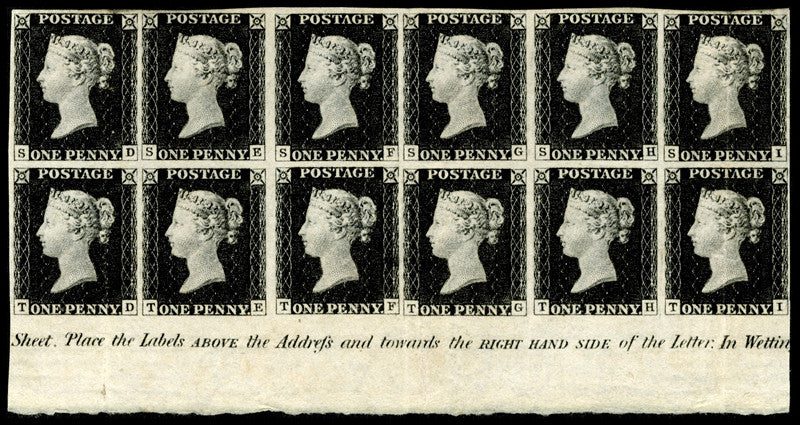
  • Appearance: The Penny Black depicted Queen Victoria’s left-facing profile, with the inscriptions POSTAGE above and ONE PENNY below.
  • Dimensions: Approximately 19 × 22 mm, printed in black ink.
  • Forgery Prevention: Each stamp bore unique corner letters indicating its position on the sheet of 240 stamps. Intricate background patterns and watermarked paper further deterred counterfeiting.
  • Printing: Produced by Perkins, Bacon & Co. in London, with over 68 million copies printed between May 1840 and February 1841.

The Penny Black introduced the Universal Penny Post, allowing letters up to half an ounce (14 g) to be sent anywhere in the British Isles for a flat rate of one penny. This innovation:

  • Made postal services affordable to ordinary citizens.
  • Standardized rates regardless of distance.
  • Encouraged literacy, correspondence, and commerce.

Its success was immediate, with printers producing up to 600,000 stamps daily.

Despite its success, the Penny Black had one flaw: the red cancellation ink used to mark stamps was easily removed, enabling reuse. To solve this, the stamp was replaced in 1841 by the Penny Red, which used black cancellation ink that was harder to erase.

Although millions were printed, only about 1.3 million Penny Blacks survive today, making them highly prized by philatelists. Values vary widely depending on condition, ranging from £40 to several thousand pounds.

The Penny Black’s legacy endures as a symbol of innovation. It not only transformed postal systems but also established the tradition of featuring monarchs on British stamps—a practice that continues to this day.

The Penny Black was more than just a stamp; it was a social and technological milestone. By simplifying communication, it helped knit together communities, fostered economic growth, and set the stage for modern postal systems worldwide. Its enduring appeal lies in both its historical significance and its elegant design, making it a cornerstone of philatelic history.

* Check out a great Penny Black gift from our collection!